High-Intensity Interval Training (HIIT) has gained popularity in recent years, offering many health and fitness benefits that can be obtained within a short period of time. Specifically, 25-minute HIIT-based personal training workouts provide a time-efficient way to build strength, increase endurance, and burn calories. Online platforms have made it easier than ever for fitness enthusiasts to access these workouts and incorporate them into their daily routines.
HIIT involves alternating between short bursts of intense exercise and periods of rest or lower-intensity exercise. This exercise format not only effectively targets different muscle groups but also boosts heart rate, ensuring that noticeable results can be achieved in relatively shorter workout sessions. With various exercises available to suit all fitness levels and the option to use equipment or no equipment at all, a 25-minute HIIT workout can be tailored to meet individual needs and preferences.
Key Takeaways
- HIIT workouts are time-efficient, offering numerous health benefits in just 25 minutes.
- A variety of exercises and intensity levels can be incorporated, making HIIT suitable for various fitness levels.
- Online platforms enable access to HIIT-based 25-minute personal training workouts for increased convenience.
Understanding HIIT

High-Intensity Interval Training (HIIT) is an exercise strategy that alternates between intense bursts of activity and fixed periods of less-intense exercise or complete rest. This type of training has gained substantial popularity, especially for those looking to optimize their workout routines in a limited amount of time. A 25-minute online personal training session can provide you with the essential structure needed to maximize your time and get a highly effective workout.
In a typical HIIT workout, you perform short, vigorous exercises followed by a recovery period that may involve slower-paced movements or complete rest. The idea behind this approach is to push your body to its limits during the high-intensity intervals, resulting in improved cardiovascular fitness, endurance, and overall strength.
Popular Posts
- Massage Gun vs. Foam Roller: Which Recovery Tool Reigns Supreme?
- 27 Best Calisthenics Exercises for Full-Body Strength and Fitness
- 10 HIIT Workouts for Busy Professionals: Max Fitness, Min Time
- Good Posture Working from Home: Optimize Your Workspace to Prevent Discomfort and Health Issues
- The Best Crossfit Exercises for Full-Body Conditioning
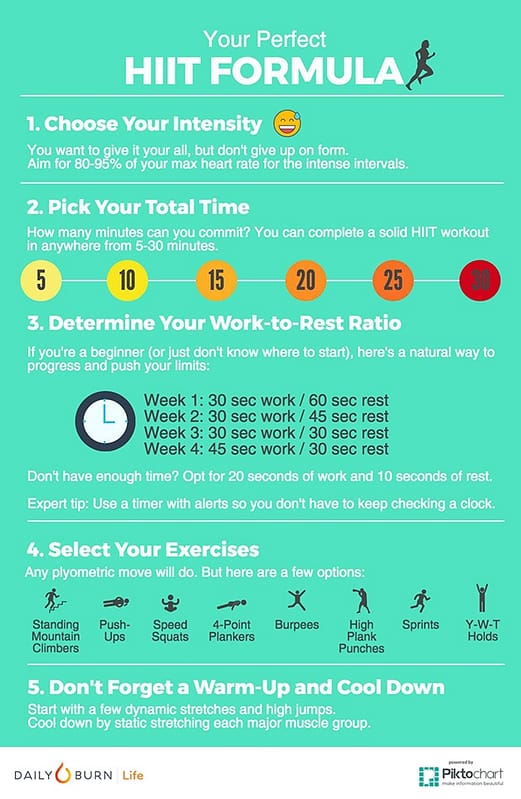
To begin your HIIT workout, start with a warm-up to prevent injury and prepare your muscles for the intense exercises ahead. The warm-up can consist of light jogging or dynamic stretching for about 3-5 minutes. Once you are warmed up, select an activity for your high-intensity interval, such as sprinting, jump squats, or burpees. Perform the chosen exercise as hard as you can for a predetermined period, usually between 20 and 90 seconds, depending on your fitness level. After the high-intensity interval, transition into a recovery period by reducing the pace of your activity or taking a brief rest for approximately the same duration as the intense interval.
Continue alternating between the high-intensity exercise and the recovery period throughout your 25-minute online personal training workout, typically aiming for a total of 4 to 8 cycles. Be consistent with your interval times while taking the necessary breaks to catch your breath and prepare for the next round of high-intensity work. Remember that proper form is essential when performing any exercise to avoid injury, so focus on executing each movement correctly.
Some benefits of incorporating HIIT into your fitness routine include:
- Improved cardiovascular health
- Increased calorie burn
- Enhanced endorphin release, leading to stress reduction
- Time-efficient workouts suitable for busy schedules
- Versatility, as HIIT can be applied to various forms of exercise
In conclusion, High-Intensity Interval Training is an effective training method to boost your fitness level and maximize the benefits of a 25-minute online personal training session. By incorporating HIIT into your workout routine consistently, you can experience a range of health benefits and achieve your fitness goals more efficiently.
Structure of a 25 Minute HIIT Session

The Warm-Up Phase
Before diving into your HIIT workout, it’s essential to spend at least 5 minutes warming up your body. This will increase blood flow to your muscles, increase your heart rate, and prepare your body for the intense workout ahead. During this phase, perform light aerobic exercises like dynamic stretches, jumping jacks, or some light jogging, to get your body ready for the main event.
The Intense Exercise Phase
After your warm-up, it’s time to move on to the core of the HIIT workout: the intense exercise phase. In a 25-minute HIIT session, this phase should last approximately 15 minutes. During this time, you’ll alternate between short bursts of high-intensity exercises followed by brief rest periods to recover. For example, you could perform 30 seconds of sprinting followed by 30 seconds of walking or a slower jog. Repeat these intervals for the duration of the intense exercise phase to maximize the benefits of the workout.
The Recovery Phase
While the intense exercise phase pushes your body to work hard, it’s just as important to give your body brief periods of rest in between. These recovery periods can last from 30 seconds to 2 minutes and can take the form of slow jogging, walking, or a complete rest, depending on your fitness level. Taking these short breaks allows your body to recover and prepare for the next high-intensity interval, ensuring optimal results from your workout.
The Cool Down Phase
Finally, after completing the intense exercise and recovery phases, take 5 minutes to cool down and gently lower your heart rate. This phase is crucial to promote the recovery process and prevent injury. Perform gentle static stretches targeting the major muscles you used during your workout, like your hamstrings, quadriceps, and glutes. Breathing exercises can also help to facilitate relaxation.
In summary, a 25-minute HIIT session will consist of a warm-up, an intense exercise phase, a recovery phase, and a cool down phase. Following these phases ensures that you will safely and effectively reap the numerous benefits of HIIT workouts.
Benefits of HIIT Workouts

Improved Heart Health
High-Intensity Interval Training (HIIT) can greatly improve your heart health. By engaging in this type of exercise, you challenge your cardiovascular system, allowing it to become stronger and more efficient. Studies have shown that HIIT can help reduce heart rate and blood pressure, while also promoting better blood sugar regulation. As you engage in HIIT workouts, your body becomes more sensitive to insulin, allowing for natural blood sugar control.
Efficient and Time Saving
One significant advantage of HIIT workouts is their efficiency. Since this training combines high-intensity exercises with short periods of recovery, you can effectively burn calories and achieve your fitness goals in a shorter amount of time compared to traditional workout routines. This 25-minute personal training workout is perfect for those with busy schedules, allowing you to maintain a consistent exercise routine without sacrificing other aspects of your life.
Increased Metabolism
Another benefit of HIIT workouts is the increase in your metabolism. As you alternate between high-intensity exercises and recovery periods, your body is forced to work harder, leading to elevate your metabolic rate. HIIT training allows you to burn more calories during the workout and even after completing it because of the afterburn effect, also known as Excess Post-exercise Oxygen Consumption (EPOC). This increased calorie burn can help reduce body fat more effectively than steady-state exercises like jogging.
Enhanced Muscle Growth
In addition to boosting your metabolism and heart health, incorporating HIIT into your 25-minute personal training workouts can promote muscle growth. The high-intensity exercises engage various muscle groups, leading to improved muscle strength and endurance. By consistently participating in HIIT workouts, you can achieve a leaner, more toned physique. Be sure to maintain proper form and balance throughout your workout sessions to optimize results and minimize injury risk.
HIIT for Weight Loss
Burning More Calories
Incorporating HIIT into your 25-minute online personal training workouts can help you burn more calories in less time. This is because high-intensity interval training pushes your body to perform at maximum capacity during short bursts of intense exercise. As a result, you can burn a significant amount of calories even within a short workout session. Research has shown that HIIT can be more effective at burning calories than traditional, steady-state cardio exercises like jogging. So, by opting for HIIT, you’re maximizing your calorie burn within your limited workout timeframe.
Boosting Metabolic Rate
Another benefit of HIIT for weight loss is its ability to increase your metabolic rate. During high-intensity exercises, your body works harder to recover, leading to a higher post-exercise oxygen consumption. This means that your body continues to burn calories at an elevated rate even after your workout is over. This afterburn effect, known as excess post-exercise oxygen consumption (EPOC), can last for hours following your training session, further enhancing your weight loss efforts.
Additionally, HIIT can help improve your overall metabolic health. Studies have shown that engaging in HIIT workouts two to three times per week can lead to a reduction in body fat, lower LDL cholesterol levels, and improved mental well-being. By incorporating HIIT into your online personal training routine, you’re not only increasing your calorie burn during the workout but also positively impacting your long-term health and weight management.
HIIT Exercises and Equipment
HIIT with Running
Incorporating high-intensity interval training (HIIT) into your running routine can significantly improve your speed, endurance, and overall cardiovascular health. To perform a HIIT running workout, begin with a 5-minute warm-up jog. Then, alternate between 30 seconds of sprinting and 30 seconds of walking or slow jogging for a total of 20-25 minutes. Make sure to cool down with a 5-minute slow jog or walk afterwards. Including hills in your running route will provide an additional challenge to your legs and increase muscle growth.
HIIT with Bicycling
Using a stationary bike or a regular bicycle, you can easily perform an effective HIIT cycling workout. Start with a 5-minute warm-up at a moderate pace. After that, increase the resistance or speed to a high-intensity level for 30 seconds, followed by 30 seconds at a low-intensity pace. Repeat this cycle for 20-25 minutes, finishing with a 5-minute cooldown. This HIIT workout will not only improve your leg strength and endurance but also boost your human growth hormone (HGH) levels, which can contribute to muscle growth and fat loss.
HIIT with Swimming
Swimming is an excellent low-impact exercise for engaging all of your major muscle groups. To incorporate HIIT into your swimming routine, start by warming up with 5 minutes of gentle swimming. Then, perform 25-50 meters of full-speed swimming followed by an equal distance of slow swimming or floating to recover. Repeat this sequence for 20-25 minutes, and finish with a 5-minute cooldown swim. This HIIT workout will challenge your cardiovascular system, enhance muscle growth, and provide a full-body workout without putting excess strain on your joints.
HIIT Exercises and No Equipment

You don’t need expensive gym equipment to enjoy the benefits of HIIT workouts. By using your own bodyweight, you can create an effective and efficient 25-minute workout that combines calisthenics, strength training, and cardio exercises.
HIIT with Calisthenics
Calisthenics, which includes bodyweight exercises, can be easily incorporated into your HIIT workouts. The following are some excellent calisthenics exercises for a 25-minute HIIT session:
- Air Squats: Stand with feet shoulder-width apart and squat down until your thighs are parallel to the ground. Stand back up to the starting position.
- Reverse Lunge to Knee Drive (R and L): Step back with one foot into a lunge, then push through the front foot and bring the back knee up towards your chest.
- Plank to Alt Foot Tap: Begin in a plank position, then alternate tapping your left and right feet to the side.
Incorporating these exercises will help increase your human growth hormone production, leading to muscle growth and improved overall fitness.
HIIT with Strength Training
Strength training can also be a part of your HIIT workouts without any equipment at all. These exercises will help target your major muscle groups, building strength and endurance:
- Walk Out to Push Up: Bend at the waist to place your hands on the ground, then walk your hands forward until you reach a plank position. Perform a push-up, and then walk your hands back towards your feet to stand up.
- Blast Off Push Ups: Start in a push-up position, push your hips back towards your heels, then explosively return to the starting position and perform a push-up.
These bodyweight strength exercises increase muscle growth and boost your metabolism, making them an ideal addition to your 25-minute HIIT workouts.
HIIT with Cardio Training
Cardio exercises can boost the intensity of your HIIT workouts and improve your cardiovascular fitness. Consider incorporating the following cardio exercises into your 25-minute HIIT sessions:
- Jump Rope: Perform this classic cardio exercise by jumping over an imaginary rope, moving your wrists in a circular motion as if you were holding a jump rope.
- Butt Kicks: Stand with feet hip-width apart, and quickly kick your heels towards your glutes, trying to make contact with each repetition.
These exercises, along with others mentioned earlier, create a well-rounded HIIT workout that targets multiple aspects of your fitness.
HIIT for Different Fitness Levels

HIIT for Beginners
If you’re new to exercise or have been sedentary, it’s important to start with a HIIT workout that matches your current fitness level. Even if you’re overweight or have type 2 diabetes, you can still benefit from HIIT. Start with moderate-intensity exercises like brisk walking or cycling, and gradually increase the intensity and duration of your workouts as you become more fit. Remember to listen to your body and adjust the intensity of your workouts accordingly.
For example, a beginner’s HIIT workout could involve alternating between 30 seconds of brisk walking followed by 30 seconds of rest. Repeat this cycle for 10-15 minutes and gradually increase the intensity by walking faster, adding inclines, or incorporating jogging intervals. Additionally, incorporating strength training exercises, such as bodyweight exercises or resistance bands, can help you build muscle and improve your overall fitness level.
HIIT for Advanced Athletes
If you’re already in good shape and have experience with intense exercise, you can take HIIT to the next level by incorporating more challenging exercises and shorter rest intervals. Advanced HIIT workouts can include activities like sprinting, burpees, or plyometric exercises that require explosive movements and power.
For advanced athletes, an example HIIT workout could consist of 30 seconds of sprinting followed by 15 seconds of rest, repeated for 10-15 minutes. As you progress further, consider reducing rest periods, increasing the number of intervals, or incorporating several different high-intensity exercises into the workout.
Regardless of your fitness level, it’s important to remember that HIIT workouts should be customized to your abilities and goals to ensure you’re getting the most benefits while minimizing the risk of injury. Always consult with a healthcare professional or fitness expert before starting a new exercise routine, and ensure proper form to maximize results and prevent injury.
HIIT-Based 25 Minute Workout Examples
Sample workout for beginners
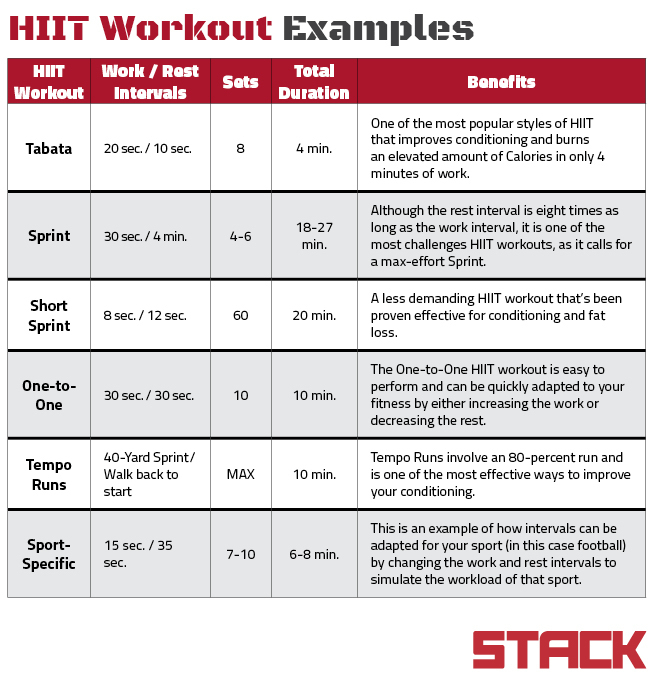
If you’re new to HIIT, start with this beginner-friendly workout routine. This workout consists of three exercises, each performed for 30 seconds, with a 1-minute rest between each circuit. Repeat the circuit five times.
- Jumping jacks: Stand with your feet together and hands at your sides. Jump while spreading your legs and raising your arms overhead. Jump back to the starting position. Repeat.
- Bodyweight squats: Stand with your feet shoulder-width apart, with your hands on your hips. Bend your knees and lower your hips, keeping your back straight until your thighs are parallel to the ground. Press through your heels to return to the starting position. Repeat.
- Mountain climbers: Start in a plank position. Bring your right knee towards your chest and quickly switch legs, mimicking a running motion. Keep your core tight throughout.
Sample workout for intermediate level
This intermediate HIIT workout involves more challenging exercises and shorter rest periods. Perform each exercise for 45 seconds, followed by a 30-second rest between circuits. Repeat the circuit four times.
- High knees: Stand with your feet hip-width apart. Lift your right knee up to hip-level and then switch to your left knee. Keep alternating as fast as possible without compromising your form.
- Push-ups: Get into a plank position with your arms straight and hands slightly wider than shoulder-width. Lower your body towards the ground, keeping your elbows close to your body. Push back up to the starting position and repeat.
- Burpees: Start in a standing position. Place your hands on the ground and jump your feet back into a plank position. Perform a push-up, then jump your feet forward and stand up, jumping into the air with your hands overhead.
Sample workout for advanced level
This advanced HIIT workout increases the intensity with more challenging exercises and minimal rest periods. Perform each exercise for 1 minute, followed by a 10-second rest between exercises. Complete the circuit three times.
- Plyometric lunges: Stand with your feet together and then step your right foot back into a lunge position. Jump straight up and switch legs in mid-air, landing with your left foot back in a lunge. Repeat, alternating sides.
- Spider-man push-ups: Perform a push-up, but as you lower your body, bring your right knee towards your right elbow. Return to the starting position and repeat on the opposite side. Continue alternating.
- Tuck jumps: Begin in a standing position with your feet shoulder-width apart. Squat slightly and jump upwards, tucking your knees to your chest. Land softly and return to the squat before jumping again.
Remember to listen to your body and modify exercises as needed to suit your fitness level. Aim for consistency and gradually increase the intensity as your endurance improves.
Frequently Asked Questions
How effective is a 25-minute HIIT workout for fat loss?
A 25-minute HIIT workout can be highly effective for fat loss. Research has shown that HIIT may decrease body fat more than steadier types of exercise, such as jogging. By alternating short bursts of high-intensity exercise with periods of rest or lower-intensity exercise, you can maximize your fat-burning potential in a shorter amount of time.
What are the top advantages of incorporating 25-minute HIIT workouts?
Incorporating 25-minute HIIT workouts into your fitness routine offers several advantages, including:
- Time efficiency: You can achieve significant results in less time compared to traditional steady-state workouts.
- Increased calorie burn: HIIT can help increase calorie burn both during and after your workout, thanks to the afterburn effect (also known as Excess Post-Exercise Oxygen Consumption).
- Improved cardiovascular health: Regular HIIT workouts can help improve heart health, lower blood pressure, and increase your overall fitness level.
- Greater flexibility: HIIT workouts can be customized and performed with various types of exercises, making it suitable for people of all fitness levels and preferences.
How many calories can be burned during a 25-minute HIIT session?
The number of calories burned during a 25-minute HIIT session depends on factors like your body weight, workout intensity, and individual metabolism. Generally, you can expect to burn anywhere from 200 to 400 calories in a 25-minute HIIT workout. Keep in mind that your body will continue burning calories at a higher rate even after the workout, thanks to the afterburn effect.
Are there any drawbacks to 25-minute online personal training HIIT workouts?
While there are numerous benefits to 25-minute online personal training HIIT workouts, some potential drawbacks include:
- Risk of injury: High-intensity exercises can increase the risk of injury if not performed correctly or without proper supervision.
- Overtraining: Doing too many HIIT sessions without adequate rest may lead to overtraining and increased risk of injury.
- Not suitable for everyone: People with certain medical conditions or those who are new to exercise may require a more gradual approach before diving into HIIT workouts.
How do HIIT workouts improve cardiovascular health in a short duration?
HIIT workouts improve cardiovascular health by pushing your heart to work at a higher intensity during the high-intensity intervals, which helps increase your cardiovascular capacity. This kind of training can lead to improvements in aerobic and anaerobic fitness, lower blood pressure, and better cholesterol levels, all of which contribute to better overall heart health.
What are some suitable exercises to include in a 25-minute HIIT workout plan?
Here are a few suitable exercises for a 25-minute HIIT workout plan:
- Burpees
- Jump squats
- Mountain climbers
- Push-ups
- High knees
- Plank jacks
- Skater jumps
- Lunges
Remember, the key to a successful HIIT workout is to choose exercises that target various muscle groups and alternate between high-intensity bursts and rest or lower-intensity intervals. This way, you can maximize your workout’s effectiveness while minimizing the risk of injury and boredom.