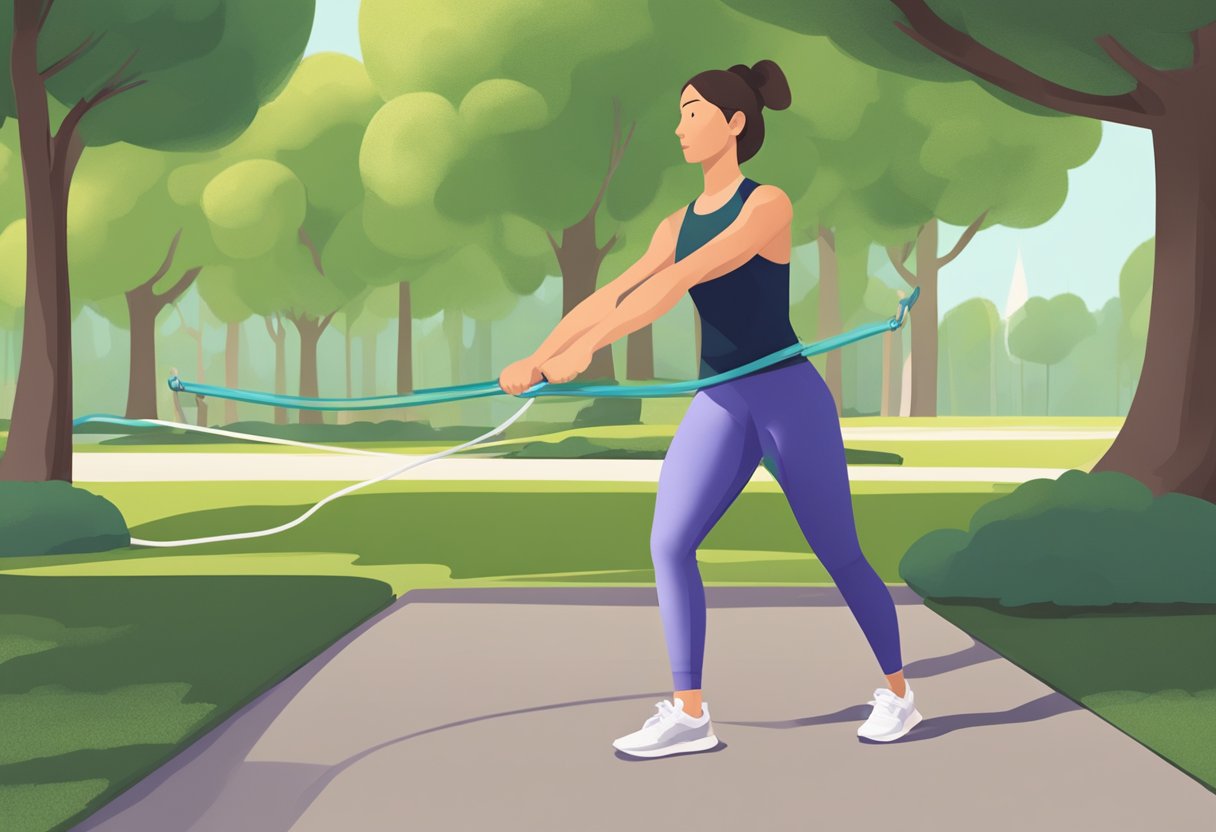
When it comes to strength training on the go, resistance band workouts offer a versatile and effective solution.
Whether you’re at home, in the gym, or out traveling, these lightweight and portable bands can be used to perform a variety of exercises targeting different muscle groups.
This means you can maintain your fitness routine anywhere, anytime, with minimal equipment.
Discover how these flexible tools can transform your home workout regimen.
Popular Posts
- Massage Gun vs. Foam Roller: Which Recovery Tool Reigns Supreme?
- 27 Best Calisthenics Exercises for Full-Body Strength and Fitness
- 10 HIIT Workouts for Busy Professionals: Max Fitness, Min Time
- Good Posture Working from Home: Optimize Your Workspace to Prevent Discomfort and Health Issues
- The Best Crossfit Exercises for Full-Body Conditioning
From building muscle to enhancing your fitness levels, resistance bands can replicate many popular strength training exercises, making them an ideal addition to your home gym.
They provide resistance throughout the entire range of motion, challenging your muscles and promoting growth.
Incorporate exercises such as triceps pushdowns and biceps curls into your routine.
These movements not only save time but also deliver results on par with traditional gym equipment.
By integrating resistance band workouts into your strength training program, you’ll maximize efficiency without compromising on quality or effectiveness.
Benefits of Resistance Band Training
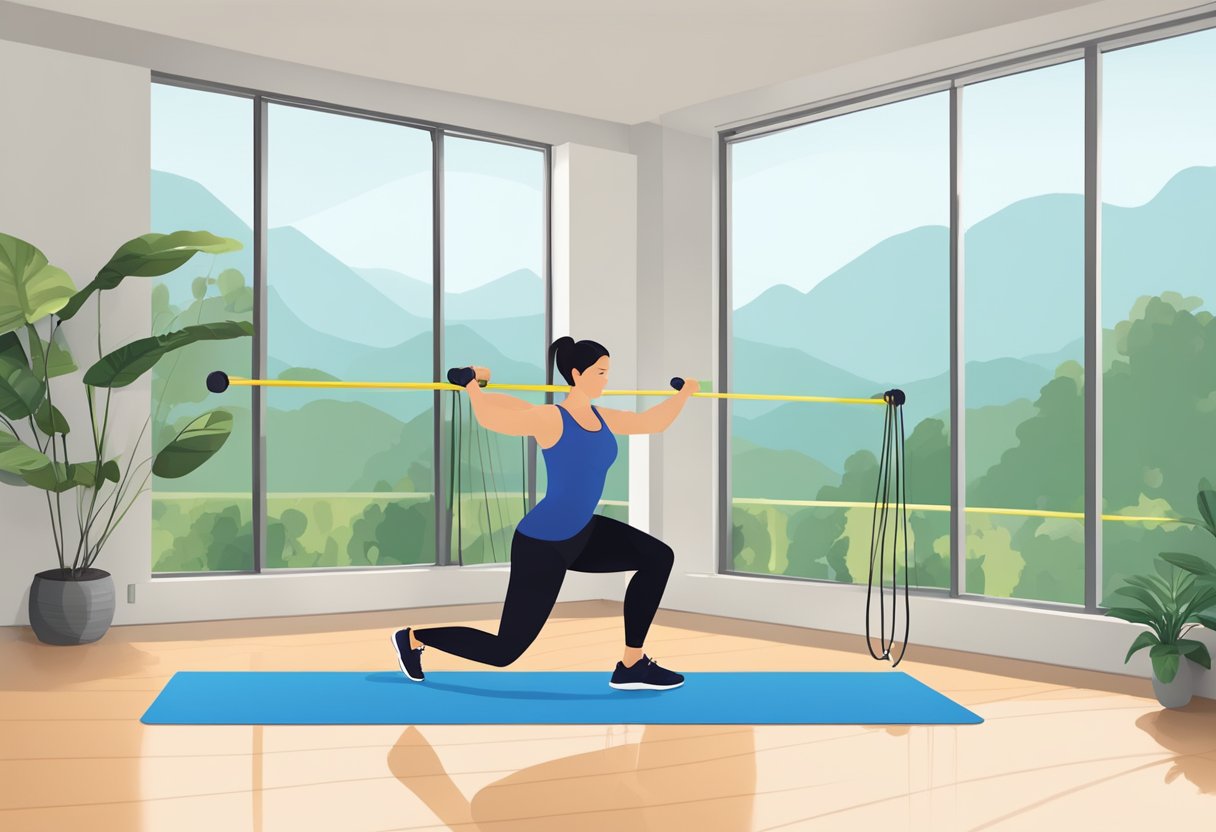
Resistance band training offers numerous advantages for enhancing strength, flexibility, and overall fitness. It is an affordable and accessible form of exercise that can be customized for any fitness level and used almost anywhere.
Versatility and Portability
Resistance bands are incredibly versatile and portable, making them ideal for traveling or home workouts.
These compact pieces of equipment fit easily into a gym bag or suitcase.
Whether you’re in a hotel room or at home, resistance bands enable you to maintain your fitness routine.
Different types of bands such as loop bands, tube bands with handles, and flat bands provide varied intensity levels and exercises.
Adaptable for Multiple Fitness Levels
One of the key advantages of resistance band training is its adaptability for various fitness levels.
Beginners can start with lighter bands to build foundational strength, while advanced users can choose heavier bands to increase resistance.
Resistance bands allow for simple adjustments in intensity by changing your grip or altering the band’s length.
This makes them suitable for people at different stages of their fitness journey.
Improving Muscle Strength and Tone
Using resistance bands effectively targets and strengthens muscles.
They provide continuous tension during exercises, which enhances muscle activation and promotes muscle growth.
Resistance bands can be used for a wide range of strength training exercises, including squats, chest presses, and rows.
By incorporating bands into your workouts, you can build muscle and improve muscle tone, making everyday activities easier.
Enhanced Joint Health and Mobility
Resistance band training also contributes to better joint health and increased mobility.
The low-impact nature of bands makes them a safer option for those with joint issues.
They help improve the range of motion through controlled, fluid movements.
Exercises with resistance bands can enhance joint flexibility, and stability, and aid in the recovery process from injuries.
This makes them a valuable tool for maintaining joint health and overall physical well-being.
Essential Resistance Band Exercises

Incorporating resistance band exercises into your strength training routine can target multiple muscle groups effectively.
They are portable, versatile, and suitable for both beginners and advanced athletes.
Lower Body Workouts
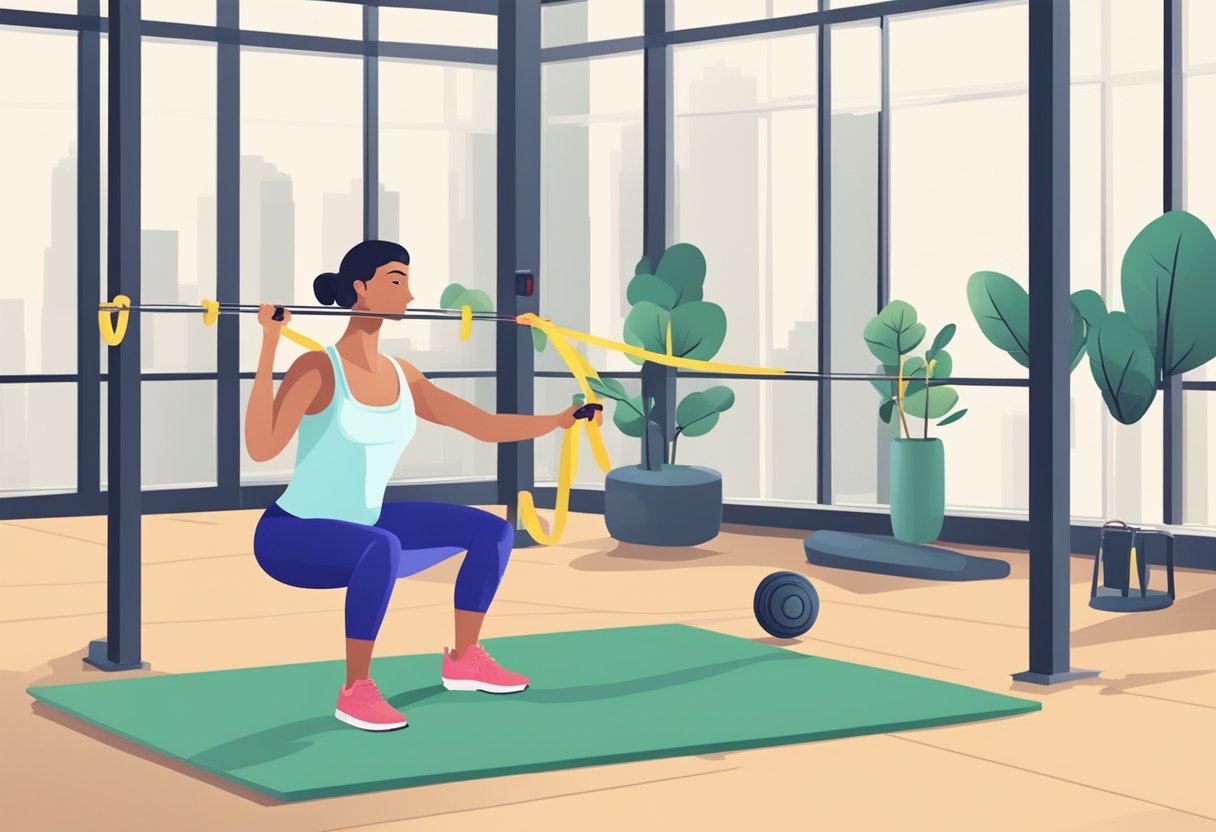
Squats: Stand on the band with feet shoulder-width apart and hold the band at shoulder height.
Perform a squat by pushing your hips back and bending your knees. Ensure your chest stays upright and return to the starting position. This exercise targets your glutes, hamstrings, and quads.
Banded Deadlifts: Place the band under your feet and hold the ends in your hands.
Hinge at the hips, keeping your back straight, until your torso is almost parallel to the floor. Return to standing. This movement strengthens your hamstrings, glutes, and lower back.
Calf Raises: Stand on the band with feet hip-width apart, holding the band ends at your sides.
Rise onto the balls of your feet, contract your calves at the top, and slowly lower back down. This simple yet effective exercise isolates the calf muscles.
Upper Body Workouts
Rows: Secure the band at ground level and sit with legs extended.
Pull the band towards your torso, keeping elbows close to your body. This targets your back muscles, biceps, and shoulders.
Triceps Kickbacks: Attach the band to a stable object at waist height, bend over slightly, and hold the band in one hand.
Extend your arm backwards, squeezing your triceps. This exercise focuses on strengthening your triceps and improving arm definition.
Bicep Curls: Stand on the band with feet shoulder-width apart, holding the ends of the band.
Curl your hands towards your shoulders, keeping your elbows stationary. This targets the biceps specifically and helps improve arm strength.
Core and Trunk Exercises
Russian Twists: Sit on the floor with legs bent, holding the band taut between your hands.
Lean back slightly and rotate your torso from side to side. This exercise works your abs and obliques effectively.
Plank Band Pulls: Get into a plank position with the band looped around one hand and anchored behind you.
Pull the band towards your chest while maintaining a stable core and lower back. This is excellent for overall core stability.
Standing Woodchoppers: Attach the band above shoulder height.
Stand with feet shoulder-width apart, holding the band with both hands. Pull the band diagonally across your body, moving from high to low. This dynamic move targets the core, obliques, and shoulders.
Setup and Use of Resistance Bands
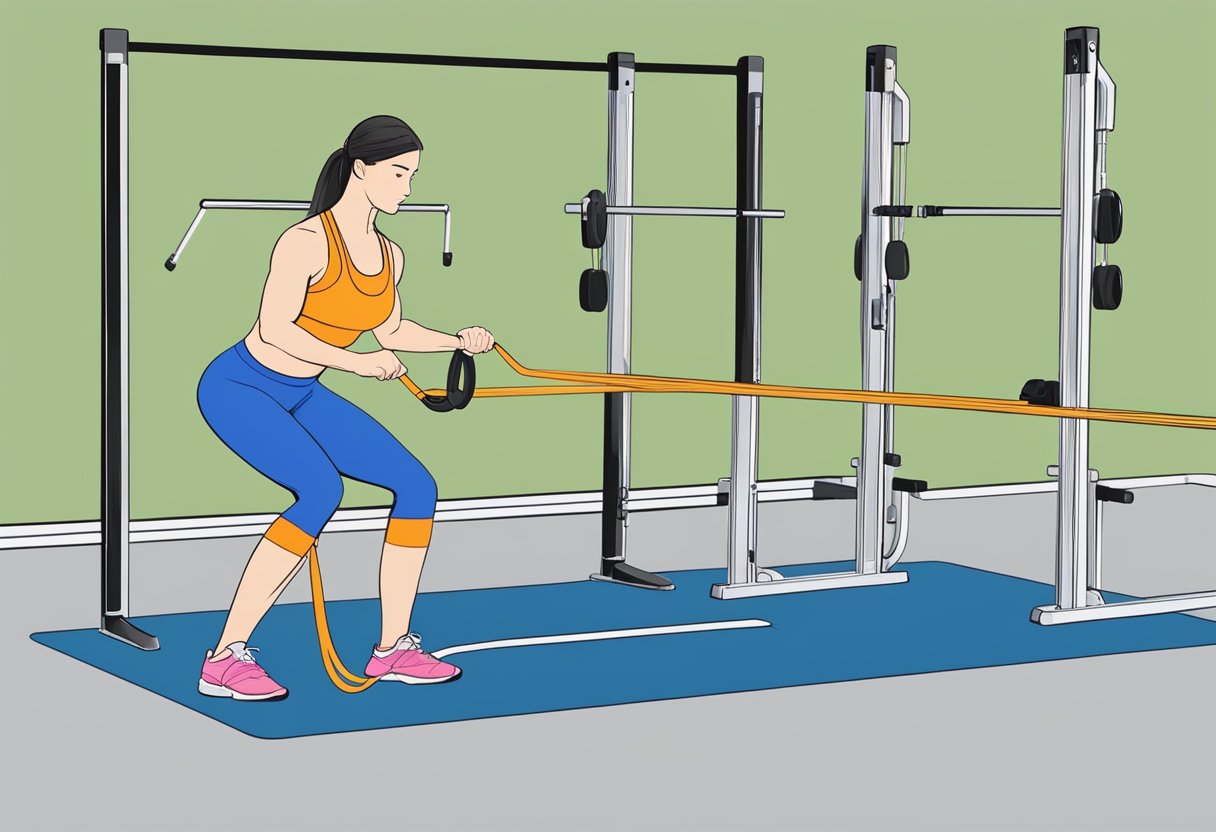
Getting the most out of your resistance band workouts requires selecting the right type of band, ensuring proper anchoring, adjusting the tension for your needs, and maintaining good form for safety.
Choosing the Correct Band
Different resistance bands offer varying levels of tension and handles.
Loop bands and elastic bands without handles are versatile for exercises pushing against the torso and legs.
Rubber bands with handles provide stability for upper body workouts.
When choosing a band, consider your current strength level and the muscle groups you plan to target.
Beginners may want to start with low to medium tension bands, while more advanced users can opt for higher resistance options.
Proper Anchoring Techniques
Anchoring is essential for effective resistance training and stability.
You can anchor a resistance band to a door anchor, around the feet shoulder-width apart, or to a sturdy piece of furniture.
Make sure the anchor point is secure to prevent the band from snapping back.
When anchoring to a door, position it at different heights to vary the range of your workouts.
For added safety, always test the anchor by pulling lightly before starting your exercise.
Adjusting Resistance and Tension
Adjusting resistance is key for tailoring workouts to your needs.
Increase tension by shortening the band length, either by wrapping it around your hands or twisting it once or twice.
Conversely, reduce tension by extending the band or using a band with less resistance.
Customize tension for each exercise to ensure optimal muscle engagement.
When standing on the band for exercises like bicep curls, keep your feet shoulder-width apart for balanced tension.
Maintaining Form and Safety
Maintaining proper form is crucial to prevent injuries and maximize the benefits of your workout.
Keep your core engaged and spine neutral during exercises.
For lower body exercises, ensure your feet are shoulder-width apart and knees slightly bent.
When performing upper body exercises, focus on your posture and avoid locking your elbows.
Always perform movements in a controlled manner to avoid overstretching the bands.
Consistently checking form can help in achieving safer and more effective workouts.
Combining Resistance Bands with Other Equipment
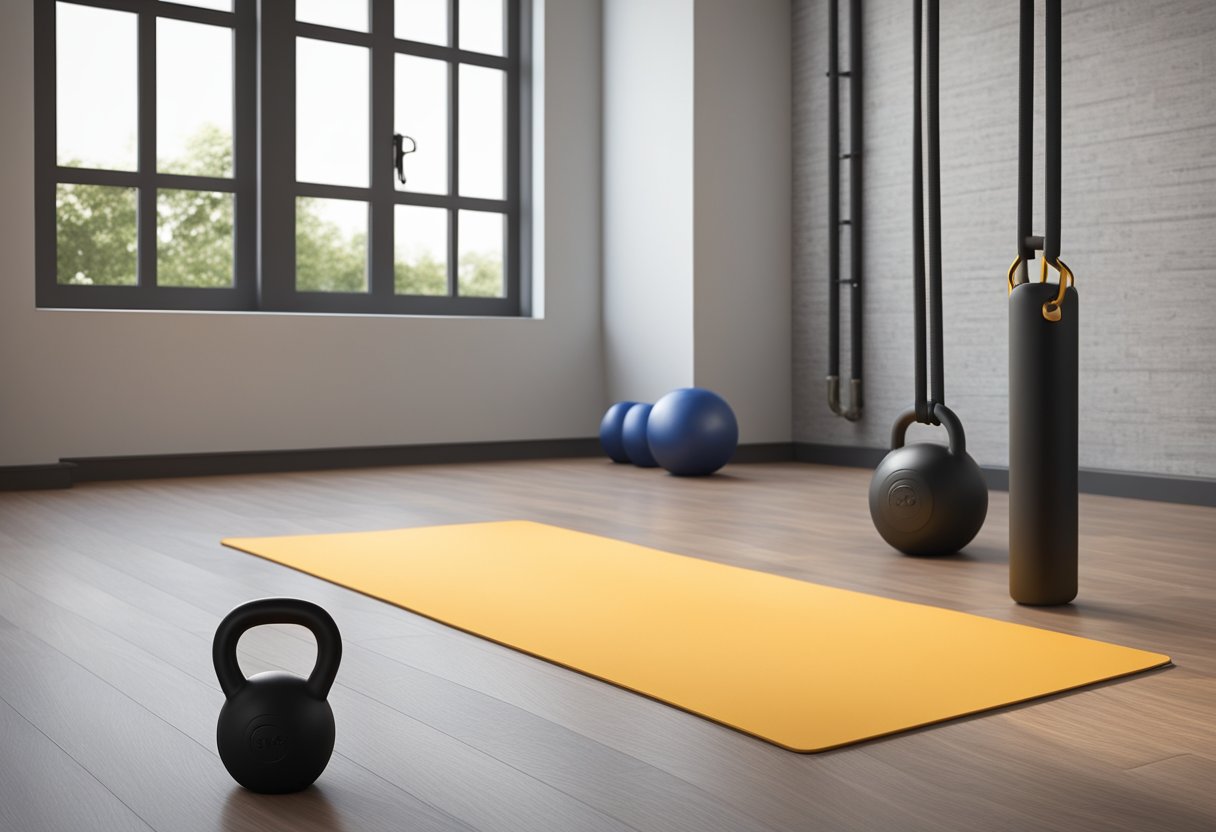
Integrating resistance bands with other equipment like free weights and machines can elevate your strength training routine. These combinations offer added resistance, versatility, and enhanced muscle engagement.
Pairing with Free Weights
When paired with free weights like dumbbells and barbells, resistance bands provide extra resistance through the entire range of motion.
For instance, attaching a resistance band to a barbell during a deadlift can increase the load as you lift, challenging your muscles differently than traditional weights alone.
This combination can help you break through strength plateaus by constantly varying the resistance.
Resistance bands can also reduce wear and tear on your joints.
While lifting heavy iron weights, the elastic resistance gradually increases, providing a smoother lifting experience.
This can lessen the abrupt stresses usually placed on joints, making your workouts safer.
Ensure that you secure the bands properly to avoid injuries.
Incorporating into Machine Exercises
Using resistance bands with standard gym equipment like cable machines and leg presses can enhance your workouts.
For example, adding a resistance band to a leg press machine can increase tension as you extend your legs, working your muscles more thoroughly.
Resistance bands can also replace traditional weights in some machine exercises.
If the machine has removable weight stacks, you can substitute them with bands for a different form of resistance.
This method allows you to simulate the same exercises with varied intensity, providing an alternative to iron weights and a unique challenge to your muscles.
Always check the machine’s compatibility with resistance bands to avoid any potential damage.
Hybrid Exercises for Enhanced Effectiveness
Hybrid exercises involve combining resistance bands with kettlebells or other gym equipment, offering a multidimensional approach to strength training.
For instance, you can perform kettlebell swings while standing on a resistance band, or incorporate them into a kettlebell squat for added resistance.
Resistance bands can also be combined with machine exercises to create hybrid moves.
For example, while performing a chest press on a machine, adding a band around the handles can provide extra elastic resistance.
These hybrid exercises enhance muscle engagement and can target multiple muscle groups simultaneously, making your workouts more efficient.
Specific Workouts for Targeted Muscle Groups

Maximize your strength training on the go by focusing on specific muscle groups using resistance bands. These exercises will help you target your legs, glutes, back, shoulders, core, arms, and chest efficiently.
Leg and Glute Workouts
Resistance bands are excellent tools for leg and glute workouts.
Squats with resistance bands can target your quadriceps, hamstrings, and glutes. Loop a band around your thighs and perform squats, ensuring your knees don’t go past your toes.
Glute bridges can activate your glute muscles effectively. Place the band above your knees and lift your hips towards the ceiling while keeping the core engaged.
Standing leg abductions help strengthen your hip abductors and glutes.
Stand on the band and lift one leg to the side.
Back and Shoulder Enhancements
Resistance bands are excellent for targeting back muscles, shoulders, rhomboids, and trapezius.
Seated rows can strengthen your back; sit on the floor, extend your legs, and pull the band towards your waist.
Resistance band pull-aparts work on your rhomboids and posterior deltoids.
Hold the band with both hands, shoulder-width apart, and pull it apart until your arms are fully extended outward.
For shoulders, perform overhead presses by standing on the band and pressing it overhead.
This exercise targets your deltoids and trapezius.
Focused Core Strengthening
Core exercises with resistance bands can effectively engage your abdominal muscles.
Standing band rotations can target the obliques. Secure the band at waist height and pull it across your body while keeping your arms straight.
Plank band pull-throughs can challenge your core stability. In a plank position, pull the band under your body from side to side.
For your lower abs, try resistance band leg drops.
Lie on your back, loop the band around your feet, and lower your legs slowly towards the ground while keeping your core tight.
Arm and Chest Exercises
Arm and chest exercises with resistance bands can be very potent.
Band bicep curls involve standing on the band and curling it upwards to work your biceps. Ensure a slow and controlled movement for maximum engagement.
Tricep extensions can target the triceps.
Secure the band overhead and extend your forearms upwards while keeping the upper arms stationary.
For the chest, perform resistance band chest presses.
Anchor the band behind you at chest height and press your hands forward as if you are pushing something away. This move engages the pectoral muscles effectively.
Adjusting Workouts for Various Goals and Populations

Adjusting resistance band workouts can help accommodate the needs of beginners, athletes, and women. This enhances fitness routines to focus on mobility, flexibility, and strength training.
Modifications for Beginners
Beginners should start with lighter resistance bands to avoid injury and improve mobility and flexibility.
Begin with basic exercises like bodyweight squats, resistance band rows, and shoulder presses.
Focus on proper form before increasing resistance or repetitions.
This ensures that you build a stable foundation for future strength training. Incorporate stretches post-workout to further enhance flexibility.
Try performing each exercise for 10-12 reps, allowing for rest between sets.
Gradually adjust the resistance and the number of sets as your muscles adapt and strengthen.
Challenging Variations for Athletes
Athletes need more intensity to see significant strength and muscle gains.
Use heavy resistance bands and incorporate explosive movements such as banded jumps and sprints.
Combine band workouts with traditional weightlifting to create a comprehensive strength training regimen.
Include multi-joint movements like squats and deadlifts to build muscle more effectively.
Monitor progress by gradually decreasing rest intervals and increasing the number of repetitions.
Consider banded pull-ups and resistance band bench presses to further challenge your upper body strength.
Tailored Workouts for Women
Women may focus on building muscle and toning specific areas such as the glutes, legs, and arms.
Incorporate exercises like resistance band hip thrusts, lateral leg raises, and tricep extensions.
Medium-resistance bands are generally adequate for toning and muscle-building.
Adjust the resistance and volume based on your fitness level.
Implement compound movements combined with isolated exercises.
This approach ensures balanced muscle development and supports overall fitness goals.
Perform 15-20 reps per exercise to target endurance as well as strength.
Frequently Asked Questions
What are resistance bands?
Resistance bands are elastic bands used for strength training. They provide resistance in various exercises to engage and strengthen different muscle groups.
Can you build muscle with resistance bands?
Yes, resistance band exercises are effective for building muscle. They are similar to conventional weight training in stimulating strength gains.
Can I replace weights with resistance bands in my workout?
Yes, resistance bands can replace weights. They are portable, space-efficient, and inexpensive compared to traditional home gym equipment.
How many resistance bands do I need?
It’s recommended to have at least 2 or 3 levels of band resistance to optimize your strength training exercises. Different levels allow you to adjust the resistance based on the exercise.
What exercises can I do with resistance bands?
Common resistance band exercises include:
- Squats and banded squats
- Lunges
- Deadlifts
- Chest press and banded push-ups
- Bicep curls
- Lat pulldown
- Back exercises
Are resistance bands suitable for beginners?
Yes, resistance band workouts cater to all fitness levels. Whether you are new to strength training or experienced, bands provide a versatile and scalable workout option.
Can I travel with resistance bands?
Resistance bands are highly portable, making them ideal for strength training on the go. They easily fit into travel bags and can be used in various environments, from hotel rooms to parks.
Do I need a personal trainer to use resistance bands?
While a personal trainer can offer guidance, resistance bands come with straightforward instructions and various online resources to help you perform exercises correctly.
Frequently Asked Questions

Resistance bands can be a versatile and effective tool for building strength. This guide addresses common questions about incorporating these bands into your workout routine.
What are the top resistance band exercises for gaining muscle?
Effective resistance band exercises for muscle gain include squats, bicep curls, and triceps kickbacks. These exercises target major muscle groups and can be modified in resistance levels.
How can I incorporate resistance bands into my daily workout routine?
Integrate resistance bands by adding them to your warm-up, main workout, or cool-down. Use them for exercises like rows, presses, and leg lifts to enhance your routine.
Which resistance band workouts are most effective for strength training when traveling?
Travel-friendly resistance band workouts include standing rows, seated leg presses, and chest flys. These exercises require minimal space and equipment, making them ideal for on-the-go strength training.
Can resistance bands replace weights for strength training?
Resistance bands can effectively replace weights for many strength training exercises. They offer similar benefits, such as improved muscle strength and endurance, and are convenient for home or travel workouts.
What is the recommended duration for a resistance band strength workout session?
A resistance band strength workout session should last between 20 to 40 minutes. This duration allows you to complete various exercises targeting multiple muscle groups.
How often should I perform resistance band workouts for optimal strength gains?
For optimal strength gains, aim to perform resistance band workouts 3 to 4 times per week. Ensure you target different muscle groups each session. Also, include rest days for recovery.