Short, intense workouts are revolutionizing online personal training programs. These efficient exercise routines pack a powerful punch in minimal time, making them perfect for busy individuals seeking maximum results.
Incorporating high-intensity workouts into your online training can boost metabolism, improve cardiovascular health, and increase muscle strength in less time than traditional longer sessions.
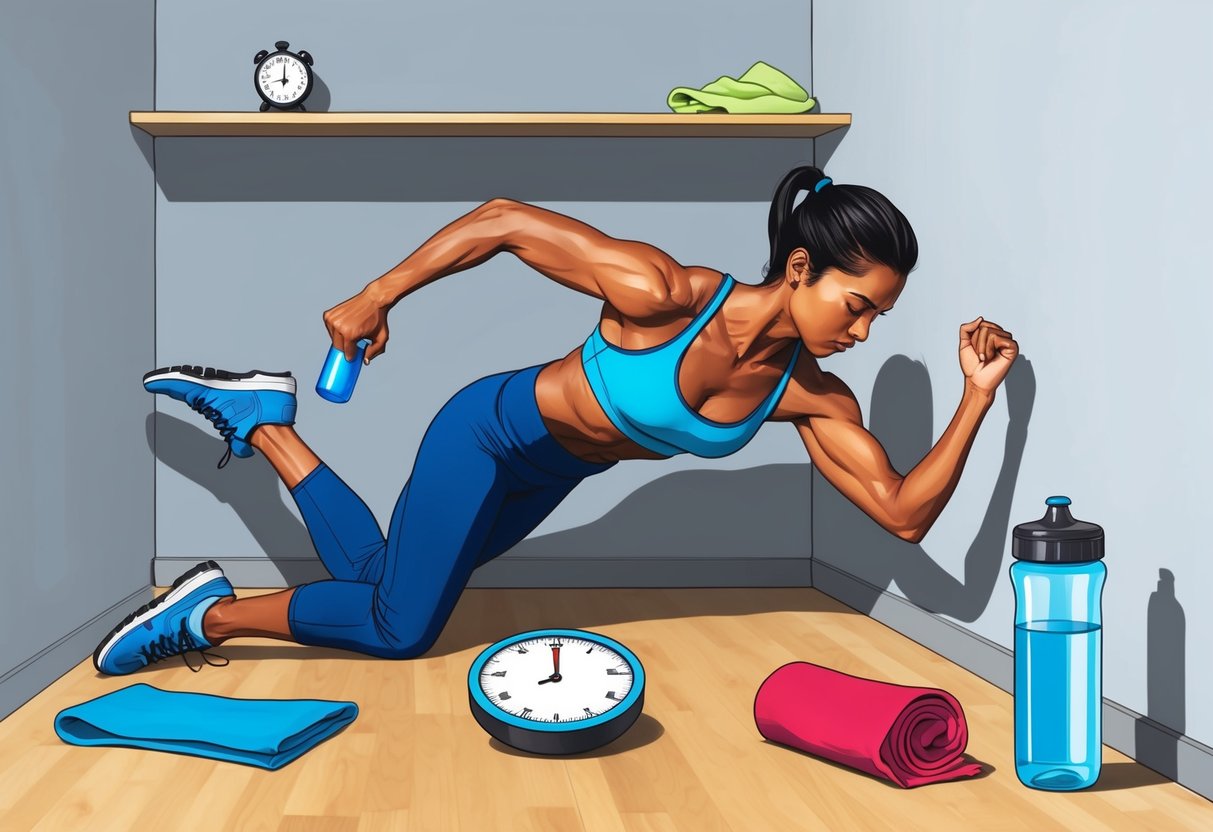
By focusing on short bursts of intense activity, you can achieve remarkable fitness gains without spending hours at the gym.
Online personal trainers are increasingly integrating these workouts into customized programs, allowing clients to reap the benefits from the comfort of their homes or local parks.
Popular Posts
- Massage Gun vs. Foam Roller: Which Recovery Tool Reigns Supreme?
- 27 Best Calisthenics Exercises for Full-Body Strength and Fitness
- 10 HIIT Workouts for Busy Professionals: Max Fitness, Min Time
- Good Posture Working from Home: Optimize Your Workspace to Prevent Discomfort and Health Issues
- The Best Crossfit Exercises for Full-Body Conditioning
These intense sessions not only save time but also keep your workouts fresh and challenging. You’ll push your limits, break through plateaus, and see continuous improvements in your fitness level.
With expert guidance from your online trainer, you can safely and effectively harness the power of short, intense workouts to transform your body and health.
Key Takeaways
- Short, intense workouts maximize efficiency and results in less time
- High-intensity training improves cardiovascular health and muscle strength
- Online personal trainers can help you safely incorporate intense workouts into your routine
Maximizing Efficiency with Short Intense Workouts

Short, intense workouts offer a powerful way to achieve fitness goals in less time. These concentrated exercise sessions deliver remarkable results by pushing your body to its limits.
The Science Behind Shorter, More Intense Exercise
High-intensity interval training (HIIT) forms the backbone of short, intense workouts. This method alternates brief periods of all-out effort with short recovery intervals.
HIIT triggers excess post-exercise oxygen consumption (EPOC), causing your body to burn calories long after you’ve finished exercising.
Your body adapts quickly to this type of training, improving cardiovascular fitness and metabolic health.
Research shows that just 10 minutes of high-intensity exercise can provide benefits similar to longer, moderate-intensity sessions.
Exercise “snacks” – very short bursts of activity spread throughout the day – can also boost your metabolism and improve insulin sensitivity.
Comparing Short vs Long Workouts
Short, intense workouts offer several advantages over longer sessions:
- Time efficiency
- Higher calorie burn
- Improved metabolic rate
- Less stress on joints
A 10-minute HIIT workout can burn as many calories as a 30-minute steady-state cardio session. This efficiency makes it easier to maintain consistency in your fitness routine.
Short workouts also help preserve muscle mass while promoting fat loss. Longer sessions may lead to muscle breakdown if not properly structured.
You’ll experience less mental fatigue with shorter workouts, making it easier to stay motivated and committed to your fitness goals.
Key Health Benefits of High-Intensity Training

High-intensity training offers numerous health advantages that can significantly improve your physical and mental well-being. These workouts provide efficient ways to boost cardiovascular health, build strength, enhance mental clarity, speed up recovery, and manage weight effectively.
Cardiovascular Health Improvements
High-intensity training can dramatically boost your heart health. These workouts push your cardiovascular system to work harder, increasing your heart rate and improving blood flow.
Over time, this can lead to a stronger heart muscle and more efficient circulation.
You’ll likely notice improvements in your resting heart rate and blood pressure.
High-intensity exercises can also help increase your VO2 max, which measures how efficiently your body uses oxygen during exercise.
Regular high-intensity sessions may reduce your risk of heart disease and stroke. They can also improve your cholesterol levels by increasing HDL (good cholesterol) and decreasing LDL (bad cholesterol).
Strength and Endurance Gains
High-intensity workouts are excellent for building both strength and endurance simultaneously. These exercises often involve bodyweight movements or resistance training performed at a rapid pace.
You’ll challenge your muscles in new ways, promoting growth and increased power output.
High-intensity training can help you break through plateaus in your strength gains more quickly than traditional steady-state exercises.
Your muscular endurance will improve as you push through intense bursts of activity.
This increased stamina can translate to better performance in various physical activities and daily tasks.
High-intensity workouts often incorporate compound movements that engage multiple muscle groups at once. This full-body approach leads to more balanced strength development and improved functional fitness.
Mental Health and Cognitive Benefits
Engaging in high-intensity training can have profound effects on your mental well-being. These workouts trigger the release of endorphins, your body’s natural mood elevators, leading to reduced stress and anxiety levels.
You may experience improved sleep quality after high-intensity sessions. Better sleep can contribute to enhanced cognitive function, including sharper focus and clearer thinking throughout the day.
Regular high-intensity exercise has been linked to increased production of brain-derived neurotrophic factor (BDNF).
This protein supports the growth and maintenance of brain cells, potentially improving memory and learning capabilities.
High-intensity workouts can boost your self-confidence as you overcome physical challenges and see rapid improvements in your fitness levels.
Enhanced Recovery Times
Contrary to what you might expect, high-intensity training can actually lead to faster recovery times. These workouts stimulate your body to adapt more quickly to stress, improving your overall recovery capacity.
Your body becomes more efficient at removing lactic acid and other metabolic byproducts after intense exercise. This can result in reduced muscle soreness and fatigue following workouts.
High-intensity training can increase your body’s production of human growth hormone (HGH). This hormone plays a crucial role in muscle repair and recovery.
You may find that your ability to bounce back from other physical activities improves as your body becomes accustomed to the demands of high-intensity workouts.
Weight Management and Metabolic Boost
High-intensity training is a powerful tool for weight management. These workouts burn a significant number of calories in a short amount of time, making them ideal for busy schedules.
You’ll continue to burn calories even after your workout ends, thanks to the “afterburn effect” or excess post-exercise oxygen consumption (EPOC). This can lead to increased fat loss over time.
High-intensity exercises can help preserve and build lean muscle mass. More muscle means a higher resting metabolic rate, allowing you to burn more calories throughout the day.
These workouts can also improve your insulin sensitivity, helping your body better manage blood sugar levels. This can be particularly beneficial for weight management and overall metabolic health.
Incorporating Intensity into Your Exercise Routine

Boosting the intensity of your workouts can lead to significant improvements in fitness and efficiency. These strategies will help you safely increase workout intensity for maximum benefits.
Integrating HIIT into Your Workout Plan
HIIT, or High-Intensity Interval Training, is an excellent way to ramp up your exercise routine.
Start by incorporating short HIIT sessions 1-2 times per week.
Begin with 30-second high-intensity bursts followed by 60-90 seconds of rest.
As your fitness improves, increase the work intervals and decrease rest periods.
Try exercises like burpees, mountain climbers, or sprints. These moves engage multiple muscle groups and elevate your heart rate quickly.
Remember to warm up properly before HIIT sessions to prevent injury. Cool down and stretch afterward to aid recovery.
Creating a Balanced Fitness Regimen
Balance intense workouts with lower-impact activities to prevent burnout and overtraining.
Aim for 2-3 HIIT or high-intensity strength training sessions per week.
On other days, focus on moderate cardio, yoga, or light resistance training. This approach allows for adequate recovery while maintaining fitness gains.
Consider your schedule and energy levels when planning workouts.
Place high-intensity sessions on days when you’re most energized and have time for proper warm-up and cool-down.
Overcoming the Intimidation Factor
High-intensity workouts can seem daunting, but start small and build gradually.
Begin with shorter sessions or fewer intervals to build confidence.
Choose exercises you enjoy and feel comfortable performing.
As you progress, challenge yourself with new moves or increased difficulty.
Track your progress to stay motivated. Note improvements in endurance, strength, or recovery time. Celebrate small victories along the way.
Remember, intensity is relative to your current fitness level.
Focus on pushing yourself within your own limits, not comparing to others.
Specific Workouts and Exercises for Optimal Impact

Short, intense workouts can deliver remarkable results when structured effectively. These routines target multiple muscle groups, elevate heart rate, and boost metabolism for maximum efficiency.
Effective HIIT Protocols and Circuits
High-Intensity Interval Training (HIIT) forms the cornerstone of efficient workouts.
A basic HIIT protocol alternates 30 seconds of intense exercise with 30 seconds of rest for 15-20 minutes.
Try this circuit:
- Burpees
- Mountain climbers
- Jump squats
- Push-ups
- High knees
Perform each exercise for 30 seconds, rest for 10 seconds between moves. Complete 3-4 rounds.
For running-based HIIT, alternate 30-second sprints with 30-second jogs. This protocol can be adapted to various cardio machines or outdoor settings.
Targeting Major Muscle Groups Effectively
Compound exercises engage multiple muscle groups simultaneously, maximizing workout efficiency. Focus on these key movements:
- Squats (legs, core)
- Deadlifts (back, legs)
- Bench press (chest, arms)
- Pull-ups (back, arms)
- Overhead press (shoulders, arms)
For a quick strength routine, perform 3 sets of 8-12 reps of each exercise. Rest 60-90 seconds between sets.
To target your abs, include planks, Russian twists, and bicycle crunches. Perform each for 30 seconds with minimal rest between exercises.
Adapting Workouts for Home or Gym Settings
Home workouts can be just as effective as gym sessions with the right approach. Use bodyweight exercises or minimal equipment like resistance bands and dumbbells.
Home circuit:
- Bodyweight squats
- Push-ups
- Lunges
- Dips (using a sturdy chair)
- Plank holds
Perform each exercise for 45 seconds, rest for 15 seconds. Complete 3-5 rounds.
In a gym setting, utilize machines and free weights for added resistance. Try a superset routine:
- Barbell squats + leg curls
- Chest press + bent-over rows
- Shoulder press + lat pulldowns
Perform 10-12 reps of each exercise back-to-back, then rest for 60 seconds. Complete 3 rounds.
Overcoming Challenges and Plateaus with Intensity

Short, intense workouts can help you break through fitness plateaus and tackle challenges in your online personal training program. These high-intensity sessions provide efficient ways to boost your progress and keep your routine engaging.
Tracking Progress and Adjusting Intensity
Monitor your performance during 10-minute workouts to gauge improvements. Use heart rate monitors or fitness trackers to measure your VO2 max and track changes over time.
Adjust the intensity of your micro workouts as you get stronger. Increase repetitions, reduce rest periods, or add resistance to maintain challenge.
Keep a workout log to record your achievements. Note the number of exercises completed, weights used, and perceived exertion. This data helps you and your online trainer identify areas for improvement and celebrate milestones.
Variety and Adaptability in Intense Workouts
Incorporate different types of high-intensity exercises to prevent boredom and target various muscle groups.
Mix cardio bursts with strength training for a well-rounded approach. Try circuit training, Tabata intervals, or HIIT sessions to keep your body guessing.
Adapt your workouts to your schedule and available equipment. Bodyweight exercises, resistance bands, or household items can create challenging sessions anywhere.
Switch between indoor and outdoor workouts to add variety. Experiment with new exercises or movement patterns to stimulate muscle growth and skill development.
Alternative Intense Workout Modalities

Online personal training programs offer diverse options for high-intensity workouts beyond traditional cardio and strength training. These alternative modalities can provide variety and challenge while delivering similar benefits to short, intense sessions.
Circuit Training and Boot Camps
Circuit training combines strength and cardio exercises in a fast-paced, structured format. You’ll move quickly between stations, performing exercises for a set time or number of repetitions. This approach keeps your heart rate elevated and targets multiple muscle groups.
Boot camps simulate military-style training, incorporating bodyweight exercises, sprints, and obstacle courses. These sessions push you to your limits, improving overall fitness and mental toughness.
Both modalities burn calories efficiently, boost metabolism, and enhance cardiovascular endurance. They’re easily adaptable to online formats, with trainers guiding you through exercises via video or written instructions.
Pilates, Barre, and Yoga for Strength and Flexibility
Pilates focuses on core strength, posture, and controlled movements. You’ll use bodyweight resistance and sometimes equipment like reformers or resistance bands.
This low-impact option builds lean muscle and improves flexibility.
Barre workouts blend elements of ballet, Pilates, and yoga. You’ll use a ballet barre or chair for balance while performing small, precise movements that target specific muscle groups. These sessions improve posture, balance, and muscle endurance.
Yoga offers various styles, from gentle to power-based practices. More intense forms like Ashtanga or Power Yoga provide strength-building and cardiovascular benefits. Regular practice enhances flexibility, balance, and mind-body connection.
These modalities are easily incorporated into online training programs, with instructors demonstrating proper form and guiding you through sequences.
Personalization and Sustainability in Workout Intensity

Short intense workouts can be tailored to individual fitness levels and goals. They also offer sustainable long-term benefits when incorporated strategically into training programs.
Tailoring Intensity for Individual Needs
Your fitness level, goals, and preferences shape the ideal workout intensity for you. A personalized approach ensures quick routines remain challenging yet achievable.
You might start with 15-second high-intensity intervals if you’re new to exercise. As your fitness improves, you can progress to 30-second or even 1-minute bursts.
Consider your specific targets. Are you aiming to build strength, improve cardiovascular health, or boost overall endurance?
Each goal requires a different intensity focus. For strength, you might use heavier weights with shorter reps. Cardio goals benefit from faster-paced bodyweight exercises.
Your schedule also plays a role. If you have limited time, a 10-minute HIIT session could be perfect. Those with more flexibility might opt for 20-30 minute sessions.
Long-term Planning for Consistent Benefits
Sustainability is key to reaping the rewards of short, intense workouts over time. You’ll want to balance intensity with recovery to prevent burnout and injury.
A well-structured plan might include 2-3 high-intensity sessions per week, interspersed with lower-intensity activities or rest days.
Progressively increasing difficulty maintains challenge and results.
This could mean adding time to your intervals, decreasing rest periods, or introducing more complex exercises. Track your progress to stay motivated and adjust as needed.
Variety keeps your routine fresh and targets different muscle groups.
Rotate between strength-focused days, cardio-heavy sessions, and full-body workouts. This approach helps prevent plateaus and maintains your interest in the long run.
Remember, consistency trumps perfection. It’s better to stick with manageable quick workouts than to attempt unsustainable long workouts that you’ll likely abandon.
Frequently Asked Questions
Short, intense workouts offer numerous benefits in online personal training programs. You can achieve significant fitness gains in less time, making it easier to stick to your exercise routine. These workouts boost your metabolism and help burn calories efficiently.
Your cardiovascular endurance improves rapidly with high-intensity sessions. You’ll notice increased stamina and energy in daily activities. The variety in these workouts keeps you engaged and motivated to continue your fitness journey.
By incorporating short, intense workouts into your program, you maximize results while minimizing time commitment. This approach fits seamlessly into busy schedules, removing common barriers to consistent exercise.
What impact do short, explosive training routines have on muscle building and fat loss in online fitness plans?
Short, explosive training routines effectively build muscle and burn fat. These workouts stimulate muscle fibers, promoting hypertrophy and strength gains.
The high-intensity nature of the exercises boosts your metabolism, leading to increased fat burning.
Explosive movements improve power output and muscle recruitment. This translates to better overall athletic performance and a more toned physique.